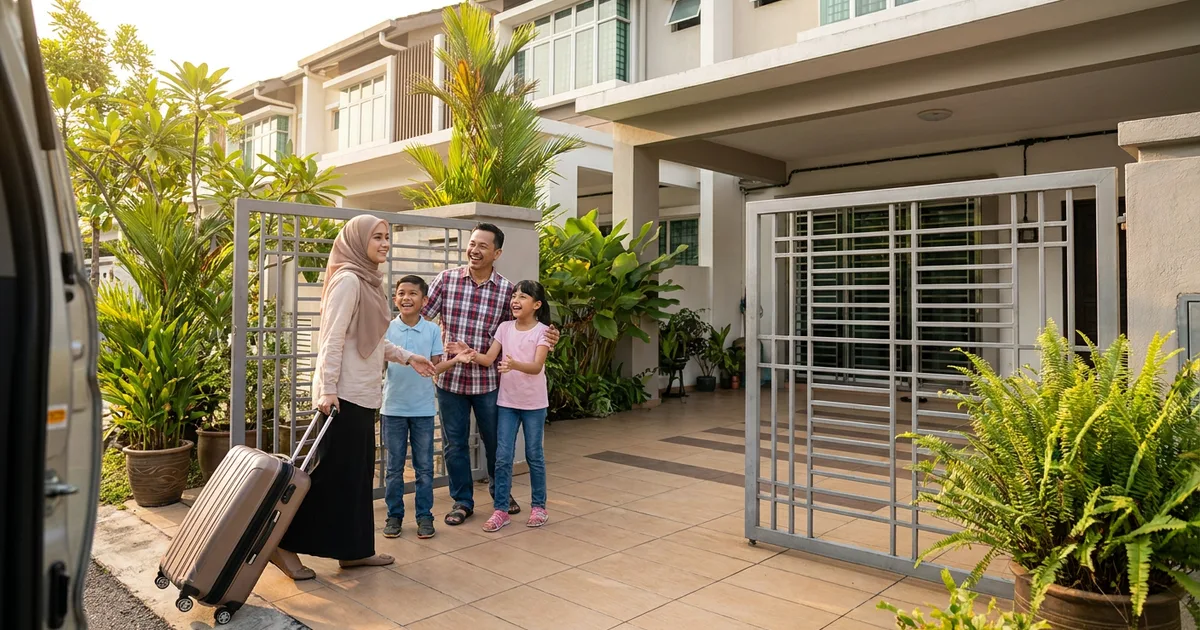
Ask any Malaysian family who has employed a helper, and the default picture is an Indonesian one. Indonesia has been Malaysia’s largest source of domestic workers for decades — before the 2009 recruitment freeze, the country hosted around 300,000 foreign helpers, most of them Indonesian. Shared language, a short flight home, and a long history of placement made “maid” and “Indonesian maid” nearly synonymous here.
That history is exactly why hiring one in 2026 is more regulated than most employers expect. Recruitment now runs under a bilateral agreement signed in April 2022, through a single legal channel, with a salary floor set by treaty rather than by the market — and with a queue, because supply is structurally tighter than demand. Agencies rarely explain any of this; their pages quote one confident salary number and a “fast processing” promise.
This guide gives you the honest version: the two salary numbers that both happen to be true, what an agency package actually costs against the official cap, how long the process genuinely takes, why the pipeline keeps tightening, and what to do if the wait does not work for your household. If you want to skip straight to vetted options, every agency in our Indonesian maid agency directory has been checked against the JTKSM government register and the KDN (Home Ministry) ESIMS blacklist.
Hiring an Indonesian Helper in 2026, at a Glance
| Question | The 2026 answer |
|---|---|
| Monthly salary | RM1,500 gazetted floor (2022 MoU); RM1,700–1,900 agency-reported market rate |
| Agency package | Lower end of RM12,000–19,000; the MoU caps placement costs at RM15,000 |
| Household income requirement | ~RM7,000/month combined (commonly applied; confirm with your agency) |
| Timeline | Two to three months from signing to arrival |
| Legal route | One Channel System (SPSK) only — via a JTKSM-licensed agency and its Indonesian counterpart |
| Household size | One helper per household of no more than six family members |
Every one of those rows has a story behind it, and most of the stories start with the same event.
From Moratorium to MoU: Why the Rules Look Like This
In June 2009, after a series of abuse cases that made headlines in both countries, Indonesia banned new recruitment of its domestic workers to Malaysia outright. The freeze lasted two and a half years. Malaysian households turned to Cambodia — visas issued to Cambodian domestic workers roughly tripled — and the market never fully re-concentrated afterwards. Recruitment only resumed on 1 December 2011, after a revised agreement guaranteed workers the right to keep their own passports and take a weekly day off.
The current framework arrived on 1 April 2022, when both governments signed a new MoU on the employment and protection of Indonesian domestic workers. Its terms are the source of most of the numbers in this post:
- A minimum monthly wage of RM1,500 for Indonesian helpers.
- Placement costs capped at RM15,000, per Indonesia’s embassy.
- All recruitment through the One Channel System (SPSK) — a single, jointly supervised pipeline.
- One helper per household of no more than six family members.
- A weekly rest day, no passport withholding, and an online complaints channel.
The MoU runs for five years — to 2027 — and is renewable. And it has teeth: barely three months after signing, in July 2022, Jakarta froze all worker placements to Malaysia when Malaysian recruitment kept flowing through the old Sistem Maid Online, bypassing the agreed channel. Placements resumed on 1 August 2022 only after Malaysia agreed to fold that system into the SPSK. Twice in fifteen years, Indonesian supply has stopped overnight. That is worth remembering every time an agency tells you supply is guaranteed.
The One Channel System (SPSK): The Only Legal Route in 2026
The SPSK is exactly what the name says: one channel through which every legal Indonesian domestic-worker placement must flow. In practice it means your Malaysian agency must hold a valid JTKSM licence in a category covering foreign domestic helpers, and must work with a licensed Indonesian recruitment counterpart (a P3MI). The helper is medically screened and registered in Indonesia, approved by the Indonesian side, issued a calling visa by Malaysian Immigration, and given pre-departure training before she flies.
The system has been operational since late 2022, and it works — slowly. By October 2023, about 5,000 workers had been placed through it since the MoU was signed. Set that against the hundreds of thousands of Indonesian helpers Malaysian households employed at the market’s peak and you understand the queue: the channel is a deliberate bottleneck, built to make every placement traceable, rather than a pipeline built for volume.
For you as an employer, the SPSK has one overriding practical meaning: there is no legal shortcut around it. An agency offering an Indonesian helper outside the channel — “direct hire, faster, cheaper” — is offering you an undocumented placement that can collapse at the first permit renewal, and that echoes the exact practice that triggered the 2022 freeze. With Bukit Aman warning as recently as June 2026 about maid-placement scam syndicates, the channel is your protection too, not just the worker’s.
Indonesian Maid Salary in Malaysia: The Two Numbers
Search “Indonesian maid salary” and you will find pages quoting RM1,500 and pages quoting RM1,800, each with total confidence. Both are describing something real; they are just describing different things.
RM1,500 is the treaty floor. It is the minimum wage written into the 2022 MoU, and as far as we can verify in mid-2026 it remains the gazetted figure. RM1,700–1,900 is the market. It is what agencies report actually agreeing in 2025–2026 contracts, with experienced helpers at the top of the range. The gap exists because the floor has not moved while everything around it has: Malaysia’s national minimum wage rose to RM1,700 in 2025, and Indonesia’s embassy argued publicly in late 2024 that its domestic workers should get at least the same. The two governments left the question to their Joint Working Group, and until it is settled, the market has answered in the usual way — by paying more than the minimum.
| Indonesian helper | Filipino helper | |
|---|---|---|
| Official floor | RM1,500/month (2022 MoU) | USD500 (~RM2,250) phasing in through 2026 — voluntary for now |
| Agency-reported market (2026) | RM1,700–1,900/month | RM1,800/month, rising toward RM2,250 |
| Direction of travel | Upward — RM1,700 floor under discussion | Upward — USD500 becoming standard on new contracts |
Treat the market figures as agency-reported, not gazetted — they come from the same industry that is quoting you packages. But budget realistically: if you plan around RM1,500 in 2026, you are planning around the past. RM1,700 a month is the sensible baseline for a new contract, and the salary is paid directly to your helper on top of everything the agency charges. For the Filipino side of that comparison in full — including the two-year worked cost — see our breakdown of the Filipino maid salary in Malaysia.
Agency Fees and the Official Cost Structure
An agency package for an Indonesian helper bundles recruitment in Indonesia, medical screening, the calling visa and work permit, the first-year levy, insurance, the flight, and airport handover. Across Peninsular Malaysia those packages run RM12,000–19,000 for most nationalities, and Indonesian placements typically price toward the lower end of that range — one of the reasons demand stays strong despite the wait.
Here the MoU adds a number nobody in the industry likes to discuss: placement costs are capped at RM15,000, a figure stated by Indonesia’s own embassy when the agreement was signed. How every real-world quote reconciles with that cap is genuinely murky — packages differ in what they bundle, and no Malaysian authority publishes an itemised reference price. Our advice is practical rather than legalistic: treat any Indonesian-helper quote meaningfully above RM15,000 as a quote that needs explaining, line by line, in writing.
| Cost line | Typical figure (2026) |
|---|---|
| Agency package (Indonesian helper) | Lower end of RM12,000–19,000; MoU cap RM15,000 |
| Monthly salary (paid directly, on top) | RM1,700–1,900 market; RM1,500 treaty floor |
| Food, accommodation, medical care | Employer-provided, on top of salary |
| Year 2+ renewals (levy, FOMEMA, permit, insurance) | Roughly RM1,000–1,500 per year |
| Security bond (commonly quoted) | ~RM250 for Indonesian helpers |
| Household income requirement | ~RM7,000/month combined (vs ~RM5,000 for Filipino) |
The usual caveats apply, and they matter. These are market ranges reported by competing agencies, not a government price list; published levy figures conflict, so be wary of any page quoting the annual levy as a single confident number; and the RM7,000 income threshold circulates through immigration guidance and agency sites rather than one authoritative schedule — confirm the current requirement before you commit. What you can control is comparability: ask every shortlisted agency for the same itemised quote, including the replacement clause and Year 2 costs, exactly as laid out in our guide to choosing and verifying a maid agency.
The Timeline: Two to Three Months, Honestly
From signing with an agency to your helper walking through arrivals, plan for two to three months. Some placements land in six weeks; some stretch past four months. The stages, roughly in order:
- Selection and offer — interviews (usually by video call) and contract signing.
- Medical screening and biometrics in Indonesia — one to three weeks, longer if the helper is from a rural area.
- Indonesian-side approval — the agency’s P3MI counterpart registers the placement and the Indonesian authorities approve it.
- Calling visa from Malaysian Immigration — typically around a week per approval step, subject to the unit handling your file.
- Pre-departure training — four to five weeks for first-time workers, usually running concurrently with the visa steps.
- Flight, arrival formalities and handover — including FOMEMA medical and permit endorsement in Malaysia.
The timeline is also your cheapest scam detector. A genuine SPSK placement cannot start next week — so an agency advertising “ready stock Indonesian maids, can start immediately” is describing either a worker already in Malaysia on the wrong visa, or a worker who does not exist. Either way, the deposit you are being hurried into paying is the point of the exercise.
Why Supply Is So Tight — and What It Means for You
The shortage of Indonesian helpers is not a temporary backlog; it is built into how the corridor now works. Four forces stack up:
- The channel is a deliberate bottleneck. One legal route, jointly supervised, with training and approval gates — thousands of placements a year where the old informal market moved tens of thousands.
- Jakarta has stopped the pipeline twice. The 2009–2011 moratorium and the July 2022 freeze both halted supply overnight. Protection disputes now translate directly into supply risk.
- The wage question is unresolved. While the RM1,500 floor lags Malaysia’s own RM1,700 minimum wage, Indonesia has little incentive to accelerate placements — and better-paying destinations compete for the same workers.
- Fewer women need to migrate. Indonesia’s economy has grown for two decades; domestic work in Malaysia competes with jobs at home that did not exist when the corridor was at its peak.
Practically, that means three things. Start the process months before you actually need help — especially around a confinement or a school year. Decide your nationality preference first, because switching from an Indonesian to a Filipino placement midway restarts the process with a different set of agencies. And pay in stages to a company account, never in full upfront: in a supply-constrained market, desperation is exactly what scam syndicates price into their “available now” listings.
If the Wait Doesn’t Work: The Alternatives
Filipino helpers are the main alternative, with real trade-offs: higher salaries (RM1,800 rising toward RM2,250 as the Philippines’ USD500 minimum phases in), higher packages (RM15,000–22,000), but strong English and deep experience pools in childcare and elderly care — and a lower commonly-applied income threshold of around RM5,000. Other source countries — Cambodia, Vietnam, Sri Lanka and Myanmar among them — each have their own floors, agencies and processing quirks; Cambodia in particular has been absorbing Indonesian supply gaps since 2009.
Local part-time help is the option most families under-consider: Malaysian cleaners hired hourly or by session involve no permit, levy, agency package or two-year commitment, and solve a “we need the house cleaned” problem that never required a live-in helper. If what you actually need is full-time care, the full process — eligibility, paperwork, direct-hire versus agency — is mapped step by step in our guide to hiring a maid in Malaysia.
Frequently Asked Questions
How much is an Indonesian maid’s salary in Malaysia?
Two numbers are both true: the 2022 MoU sets a gazetted floor of RM1,500 per month, while agencies report actual 2026 contracts at RM1,700–1,900. With Jakarta pushing for parity with Malaysia’s RM1,700 minimum wage, budget at least RM1,700 for a new contract.
How much do agencies charge for an Indonesian maid?
Packages typically sit toward the lower end of the RM12,000–19,000 Peninsular range, and the MoU caps placement costs at RM15,000 — so get any quote above that explained line by line. Salary, food and lodging are always on top, plus roughly RM1,000–1,500 a year in renewals.
How long does the process take?
Two to three months from signing to arrival is realistic; six weeks is the lucky end. Because every legal placement flows through the One Channel System, “ready stock, start this week” offers are a scam signal, not a service level.
What income do I need to qualify?
The commonly applied threshold is around RM7,000 combined household income per month for an Indonesian helper, against about RM5,000 for a Filipino one. The figures circulate via immigration guidance and agency sites rather than one published schedule, so confirm with your agency — and note the MoU’s limit of one helper per household of six or fewer members.
Indonesian or Filipino — which should I choose?
Indonesian helpers cost less and share language proximity through Bahasa; Filipino helpers cost more and are often preferred for English-language childcare and elderly care. Decide this first — agencies specialise by source country, so the choice determines your shortlist. Our directory lets you filter both.